
 Shop online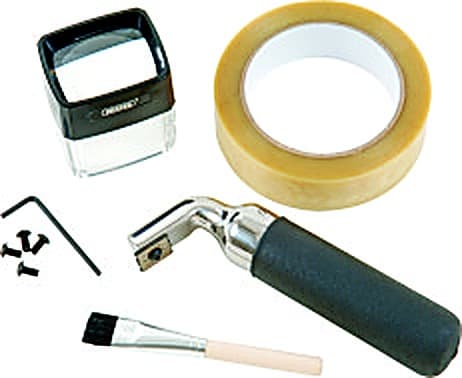
This guide explains how to select the correct Elcometer adhesion gauge for coating inspection, covering the three measurement methods Elcometer offers across its adhesion testing range. Adhesion testers verify that both surface preparation and coating application are within specification. After a coating has been applied, adhesion testing quantifies the strength of the bond between substrate and coating, between different coating layers, or the cohesive strength of some substrates. Premature coating failure adds rework cost at best, so routine adhesion testing forms part of inspection and maintenance procedures to detect potential failures early.
The cross hatch, or cross cut, method cuts the coating into small squares to reduce lateral bonding, then assesses adhesion against ISO, ASTM, DIN or other international standards. It is a fast, low-cost visual comparison method for paint and powder coatings up to 250 microns thick.
The pull off method glues tensile dollies, or stubs, to the coating; once the adhesive has cured, the force required to pull the dolly off the surface is measured. This is a simple, quantitative method that gives a definitive adhesion value, suited to laboratory or field use on flat or curved substrates. The push off method also glues a dolly to the coating, but pushes it off the surface once cured. Fast-cure adhesives can be used, making it well suited to curved surfaces such as pipelines and metal spray coatings. The full Elcometer adhesion range is supplied by BAMR, South Africa's authorised distributor.
How to Select the Correct Adhesion Gauge
Adhesion testers verify that both surface preparation and coating application are within specification. Adhesion testing after the coating process quantifies the strength of the bond between substrate and coating, between different coating layers, or the cohesive strength of some substrates. Elcometer offer a highly comprehensive range of Adhesion Gauges, split into three categories.
- Cross Hatch / Cross Cut Method The coating is cut into small squares, thereby reducing lateral bonding, and the adhesion assessed against ISO, ASTM, DIN or other International Standards. A fast, low-cost visual comparison method for paint and powder coatings up to 250µm.
- Pull Off Adhesion Method Tensile dollies (or stubs) are glued to the coating and, when the adhesive has cured, the force required to pull the dolly off the surface is measured. A simple, quantitative method giving a definitive adhesion value, ideal for laboratory or field use on flat or curved substrates.
- Push Off Adhesion Method Similar to the Pull Off test, a dolly is glued to the coating; once cured, it is pushed off the surface by the adhesion gauge. Fast-cure adhesives can be used, making it ideal for adhesion tests on curved surfaces such as pipelines and metal spray coatings.
Frequently asked questions
What does an adhesion gauge measure?
It quantifies the strength of the bond between the substrate and coating, between different coating layers, or the cohesive strength of some substrates. This measurement confirms the coating has adhered properly after application.
When should I test adhesion on a coated component?
Adhesion testing is carried out after the coating process is complete. It verifies that both surface preparation and coating application are within specification, ensuring quality before the component leaves your facility.
What can adhesion testing reveal about coating failure?
Testing identifies whether failure occurs between the substrate and coating, between different coating layers, or as a cohesive failure within the substrate itself. This information pinpoints whether the issue is surface preparation, application, or the coating system chosen.
Why is adhesion testing part of a coating quality control process?
Adhesion testing quantifies bond strength rather than relying on visual inspection alone. This gives you measurable confirmation that your surface preparation and coating application procedures are performing as specified.

Quote on the How to Select the Correct Adhesion Gauge by close of business.
Tell us about your application and we will send a quote with lead time and accessories.
Not sure this is the right model for your job? for a quick recommendation.
Request a quote
Request a quote
Tell us about your application and we will send a quote with lead time and accessories.