
 Shop online
News: Rhopoint IQ Image Quality Distinctness of Image DOI Goniophotometer
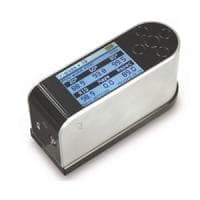
The Rhopoint IQ Image Quality Distinctness of Image DOI uses patented technology to measure the complex interaction of a surface with a light. Also known as the Rhopoint Novo-Gloss IQ / Image Quality / Haze Distinctness of Image / DOI / Goniophotometer / Meter. The instrument profiles complete specular reflectance and calculates gloss, peak specular reflectance, Distinctness of Image (DOI) and Reflection Haze.
In this article
The Rhopoint IQ Image Quality Distinctness of Image DOI uses patented technology to measure the complex interaction of a surface with a light.Also known as the Rhopoint Novo-Gloss IQ / Image Quality / Haze Distinctness of Image / DOI / Goniophotometer / Meter.The instrument profiles complete specular reflectance and calculates gloss, peak specular reflectance, Distinctness of Image (DOI) and Reflection Haze.Complete Characterisation of Specular Appearance
- Gloss
- Specular Reflectance
- Haze ·
- Distinctness of Image (DOI) Understand Surface Quality
Understanding surface quality
The Novo-Gloss IQ characterises reflective properties in a way that simulates the perception of a human observer, giving a detailed understanding of surface quality. Micro-structures on the surface of a high gloss surface can cause a reflected image to bloom and become indistinct, longer wavelength surface ripples known as orange peel can also distort this image. The Novo-Gloss IQ uses the complete specular reflectance data to calculate; Gloss, Peak Specular Reflectance, Haze and Distinctness of Image values.
Traditional specular instruments use optical masks and simple diodes to measure specified parts of the reflected image; the Novo-Gloss IQ profiles ALL specular reflectance, measuring at +/- 6 ° from the specular angle at 20 ° and 60 ° geometries.
Comparison with traditional meters
Novo-Gloss IQ vs. Gloss, Haze and DOI Meters
Traditional specular instruments use optical masks and simple diodes to measure specified parts of the reflected image; the Novo-Gloss IQ profiles ALL specular reflectance, measuring at +/- 6 ° from the specular angle at 20 ° and 60 ° geometries.
Measurement capabilities
Dual Angle Instrument
The Novo-Gloss IQ characterises surfaces at 20 ° and 60 ° geometries giving it superb resolution and the flexibility to accurately measure any surface from matt to mirror finish.
Goniophotometric Profile
Using the Novo-Soft IQ and the supplied USB data cable, the user can overlay and compare the specular reflectance curves of similar materials; this graphical fingerprint can highlight the most subtle variations in surface quality.
Gloss Measurement Verified to Existing Standards
The Novo-Gloss IQ operates within the strict angular tolerances detailed in international standards such as ASTM D523 & ISO 2813 therefore gloss values obtained on flat surfaces are indistinguishable from traditional instruments.
More Accurate Gloss Measurement
The Novo-Gloss IQ array technology makes it more accurate and repeatable than a traditional gloss meter throughout the gloss range. Traditional gloss-meters must be placed on a completely flat surface as slight variations in sample curvature or instrument placement will result in large errors, the Novo-Gloss IQ automatically adjusts for curvature or positioning errors and calculates true gloss values.
Peak Specular Reflectance
The instrument calculates the peak specular reflectance of a surface, a value that is independent of sample curvature, positioning, Haze and DOI effects.
Haze
Reflection Haze is defined as the spread of the specular component of reflected light from a glossy surface. Surface Haze is often caused by micro-structures on the top surface of the glossy material and is observed as "blooming" or "milky halo" around the reflected image. This characteristic is undetectable with a traditional gloss meter but is often associated with a drop in the perceived quality of a sample.
Distinctness of Image (DOI)
The DOI of a material determines how clearly an observer can discern a reflected image in its surface. Human perception associates "high quality" to surfaces that demonstrate excellent reflective properties, especially ones which show a "deep", "clear" and "crisp" glossiness. By measuring DOI with Novo-Gloss IQ the user can objectively determine the reflective properties of high quality materials. The DOI of a surface is affected by gloss, haze and surface distortions such as polish marks and orange peel.
More information
Got a question about this, or need help picking the right instrument for your job? , our product assistant.
Technical specialist at BAMR. Has spent years advising coating inspectors at industrial sites across southern Africa on instrument selection and compliance requirements.
More articles →
Need help choosing the right instrument?
Talk to a BAMR specialist about your application.
In a hurry? , our product assistant.