
 Shop online
Abrasive Blasting vs Bristle Blasting: Which Surface Prep Method Is Right for the Job?
Most coating failures start before the first coat goes on, so choosing the right surface preparation method for the job matters as much as choosing the right coating.
In this article
Most coating failures start before the first coat goes on. Rust, mill scale, old paint and soluble salts left on the steel stop the coating from bonding, and no amount of paint can fix poor surface preparation.
For most large jobs, abrasive blasting is the answer. But not every job suits a blast pot, a compressor and tonnes of grit. Small repairs, weld seams, live plant and sensitive areas often call for something else. That is where bristle blasting comes in.
This guide compares the two methods side by side, so you can choose the right one for your next job.
Abrasive blasting: the workhorse for large areas
Abrasive blasting fires grit at the steel with compressed air. The grit strips rust, mill scale and old coatings, and cuts a sharp anchor profile for the new coating to grip.
Where it shines
- Fastest method for large areas such as tanks, hulls, bridges and structural steel
- Reaches the highest cleanliness grades, up to white metal (ISO 8501-1 Sa 3)
- Profile depth can be tuned by changing the abrasive type and size
Where it struggles
- Needs a compressor, blast pot, hoses, a trained operator and full protective gear
- Produces large volumes of spent grit and dust that must be contained and disposed of
- Hard to justify for small spot repairs, and often not allowed near live plant, machinery or occupied areas
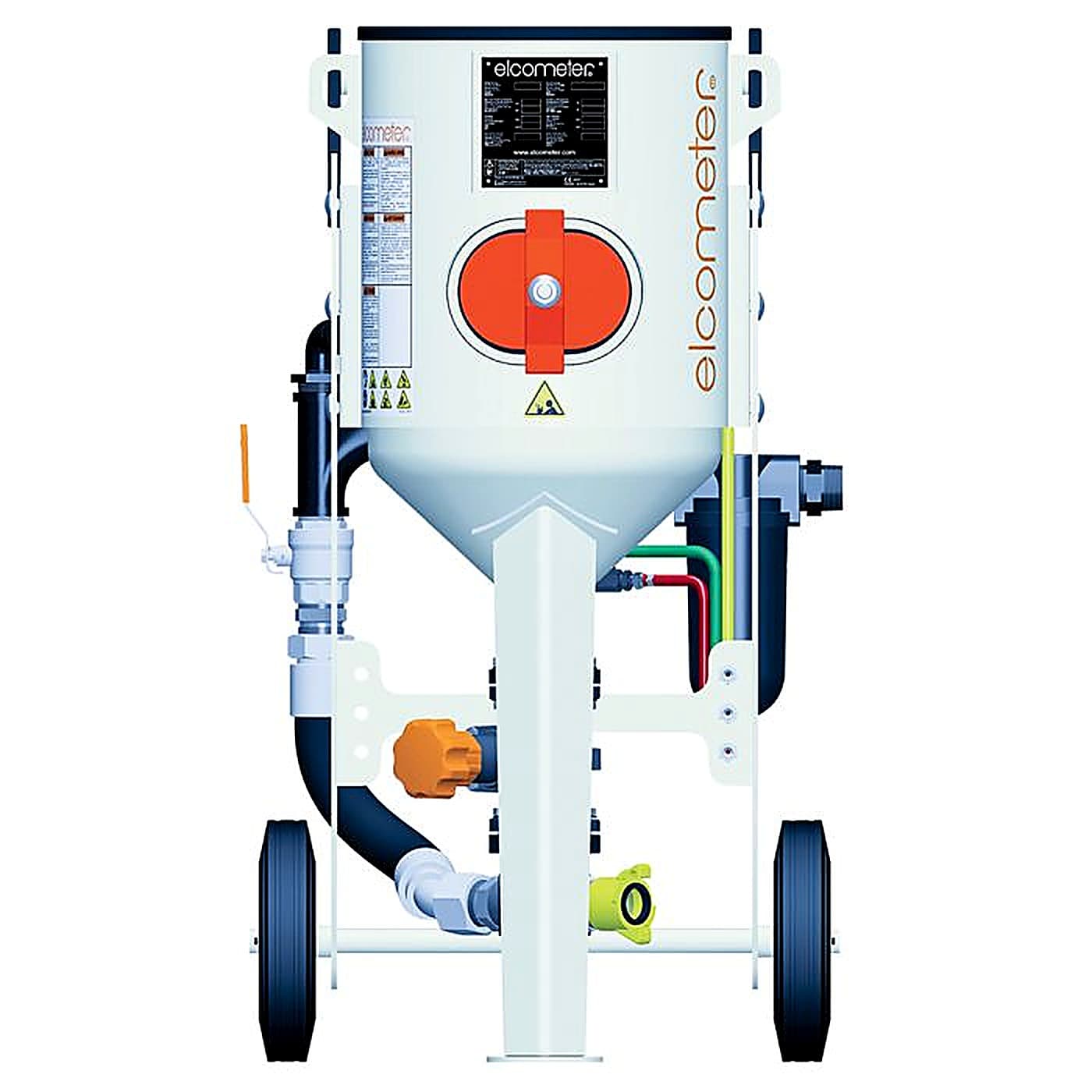
BAMR supplies portable abrasive blast machines such as the Elcometer 1440 Portable Abrasive Blast Machine.
Bristle blasting: grit-free surface prep in a hand-held tool
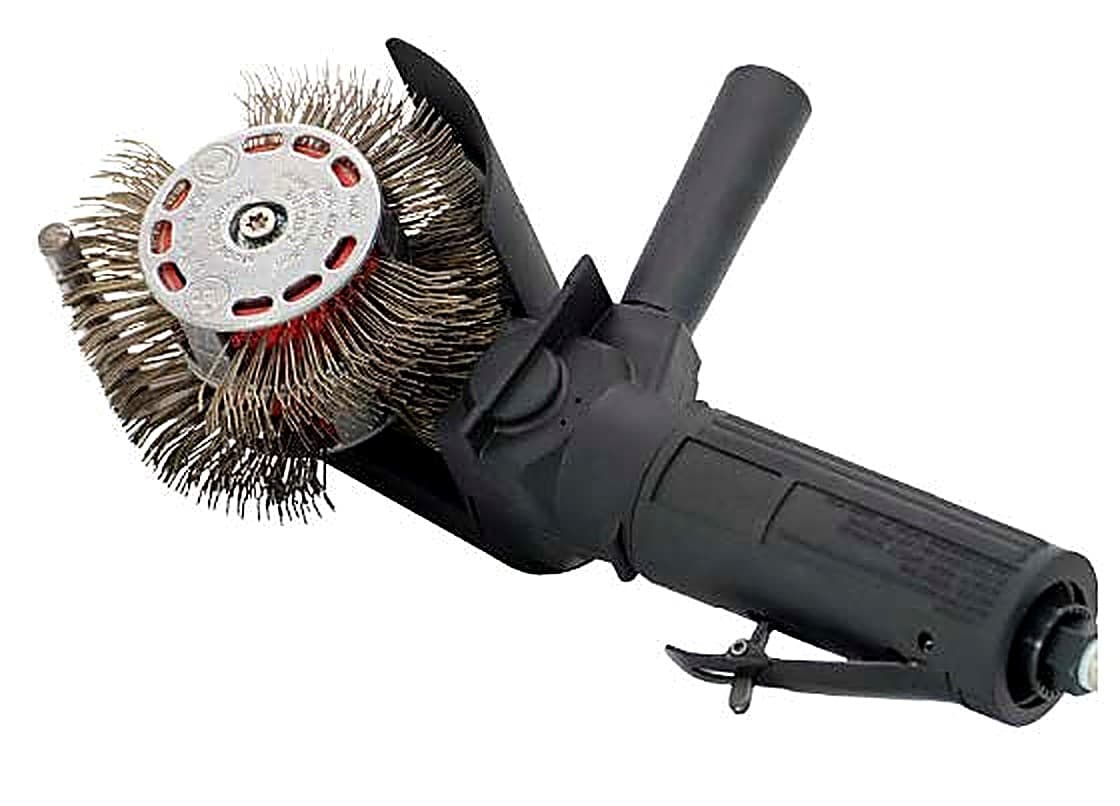
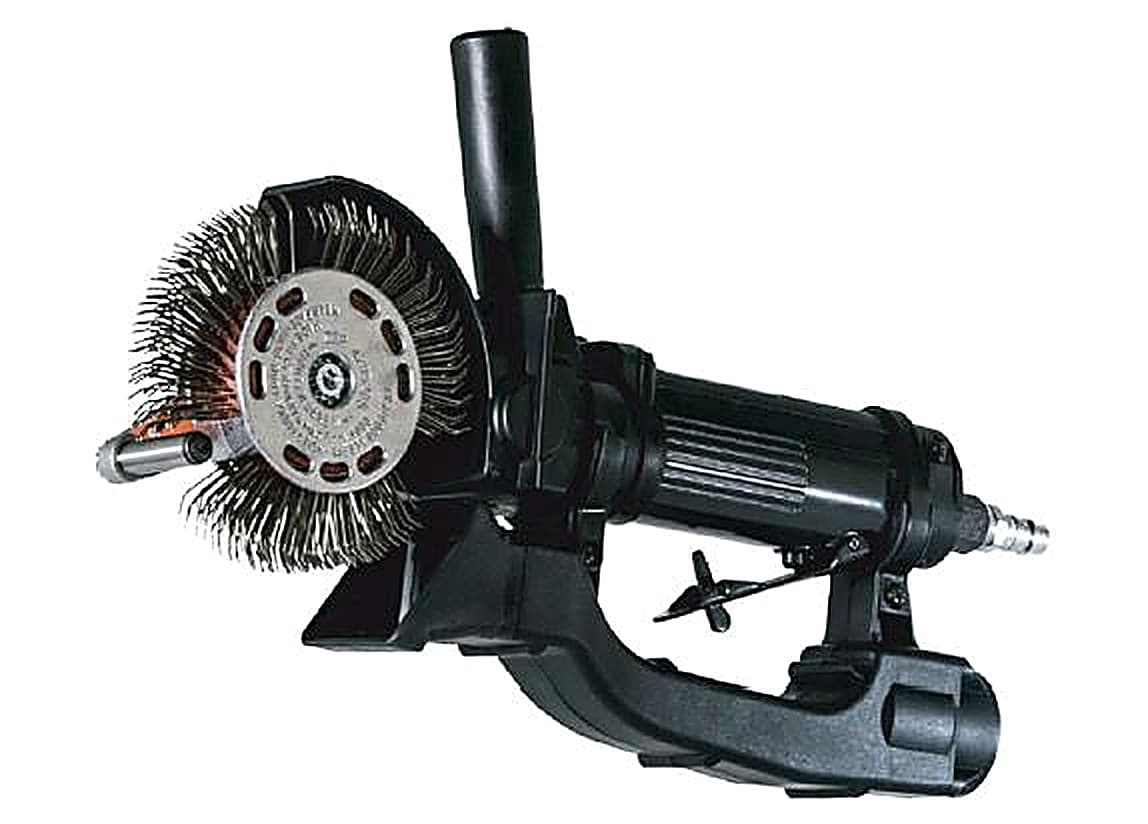
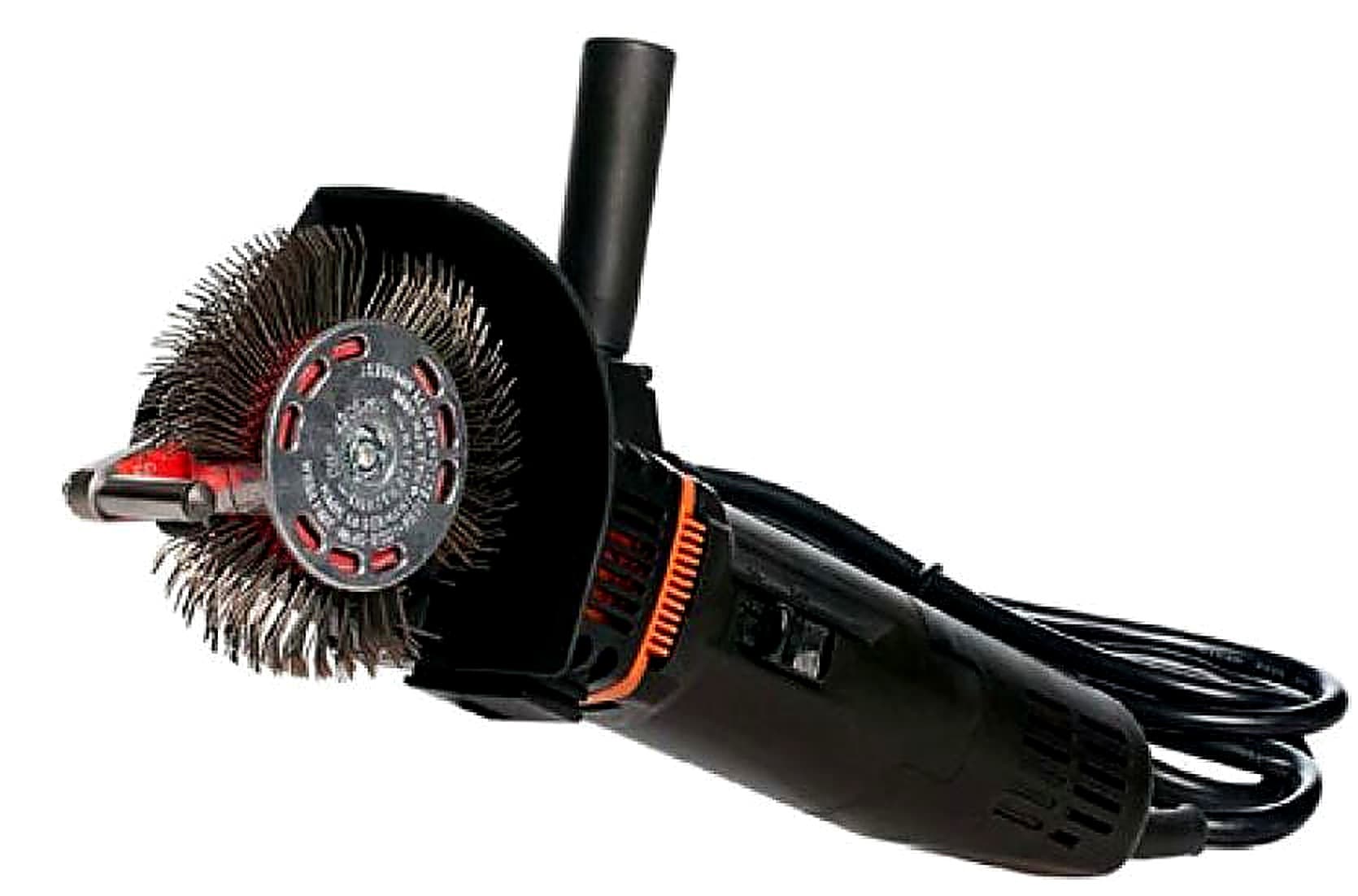
The MontiPower Bristle Blaster is a hand-held power tool with a rotating belt of hardened, forward-bent wire bristles. Each bristle tip strikes the steel and rebounds, knocking off corrosion and coatings and leaving a fresh, textured surface. No grit is involved.
Where it shines
- Creates a blast-like anchor profile of about 65 to 85 µm Rz in a single pass
- MontiPower rates the cleanliness as comparable to ISO 8501-1 Sa 2½ and Sa 3 (SSPC-SP 10 / SP 5)
- No compressor-fed blast pot, grit recovery or hazardous spent abrasive
- Ideal for weld seams, spot repairs and in-service work on live assets
- Electric and pneumatic models, with narrow belts for tight access
Where it struggles
- Much slower than blasting on large areas, so it suits targeted work, not whole structures
- Heavy, thick coatings need a pre-removal step before bristle blasting
- Only the pneumatic models are rated for hazardous (ATEX) zones
Side by side
| Abrasive blasting | Bristle blasting (MontiPower) | |
|---|---|---|
| Best for | Large areas: tanks, hulls, structural steel | Spot repairs, welds, edges, live plant |
| Speed on large areas | Fast | Slow |
| Equipment | Compressor, blast pot, hoses, full PPE | Hand-held electric or pneumatic tool |
| Waste | Spent grit and dust to contain | No abrasive waste |
| Anchor profile | Adjustable with grit choice | About 65 to 85 µm Rz |
| Cleanliness | Up to Sa 3 / SSPC-SP 5 | Rated comparable to Sa 2½ to Sa 3 |
| Set-up time | Hours on a typical site | Minutes |
Which should you choose?
The two methods work best together, not as rivals. Blast the bulk of the job, and use the Bristle Blaster where a blast pot can't go or isn't worth setting up.
Choose abrasive blasting when:
- You are preparing new steel or a full structure
- The area runs to hundreds of square metres
- The site can contain dust and handle spent grit
Choose bristle blasting when:
- You are repairing damaged coating on a small area
- You need to clean weld seams or heat-affected zones
- The plant stays live and grit would get into machinery
- You are working at height, offshore or in a confined space where moving blast equipment is difficult
- Waste disposal or environmental rules make grit impractical
Whichever method you use, measure the result
A surface that looks clean isn't proof that it's ready to coat. Before painting, check these four things:
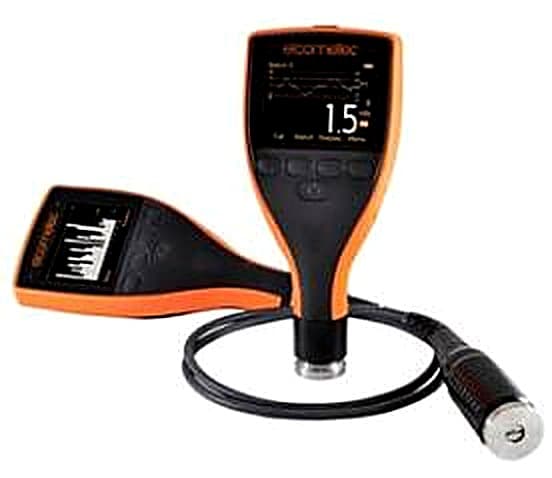
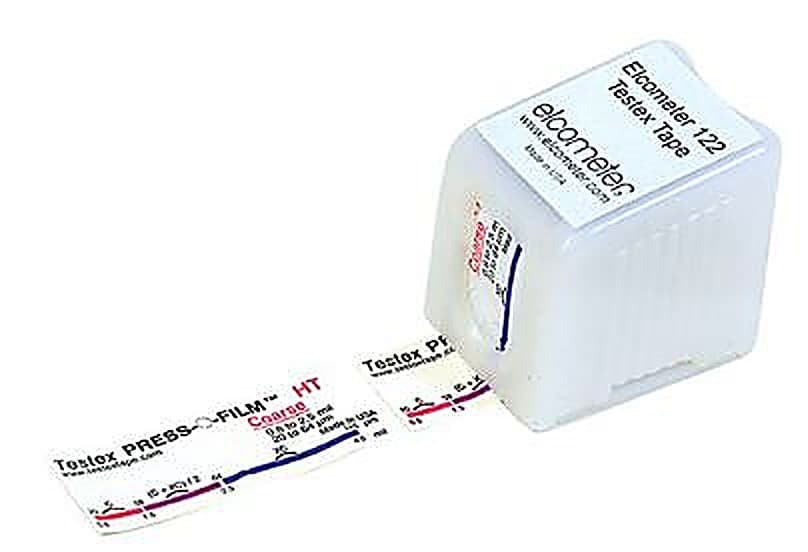
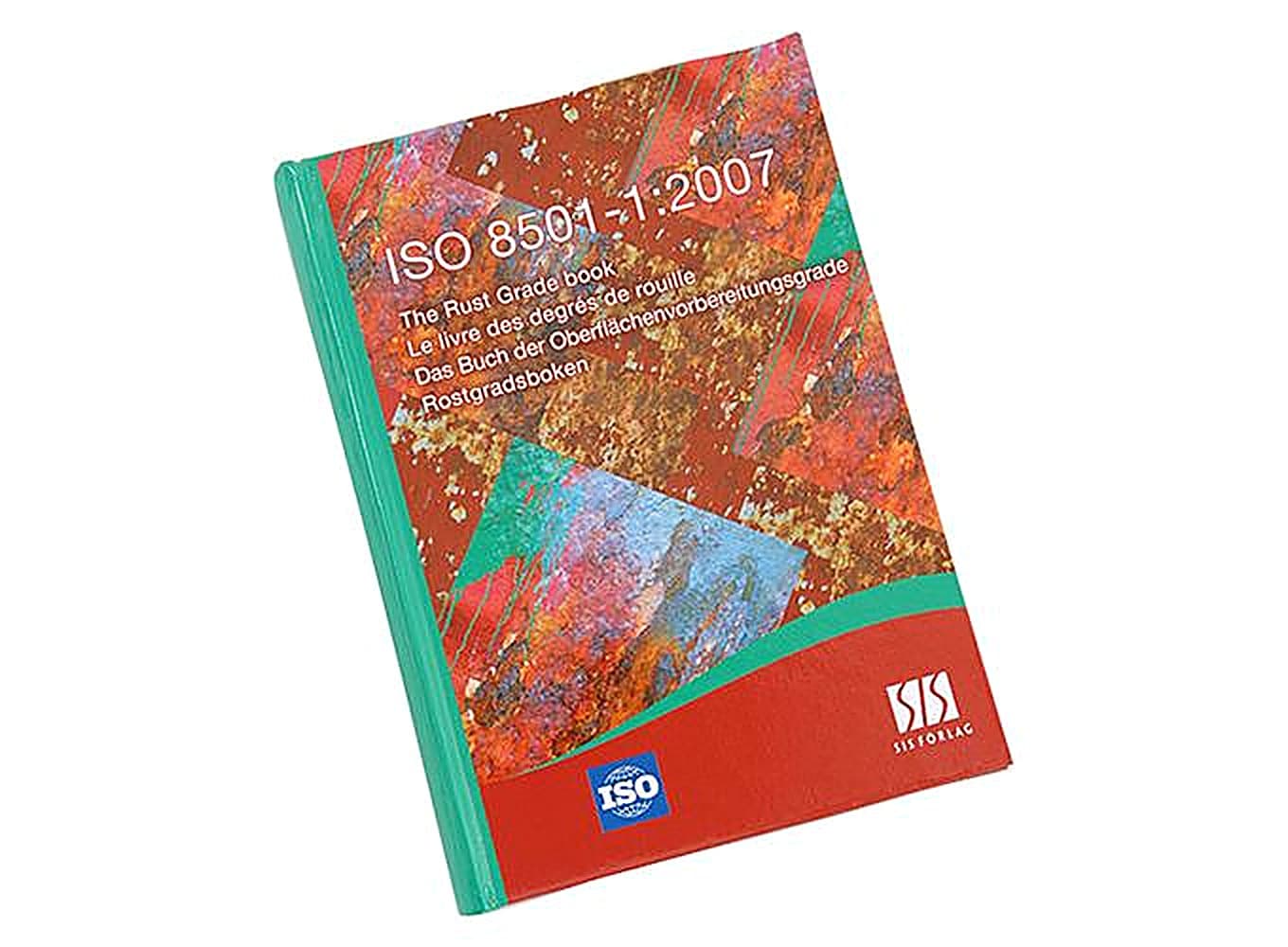
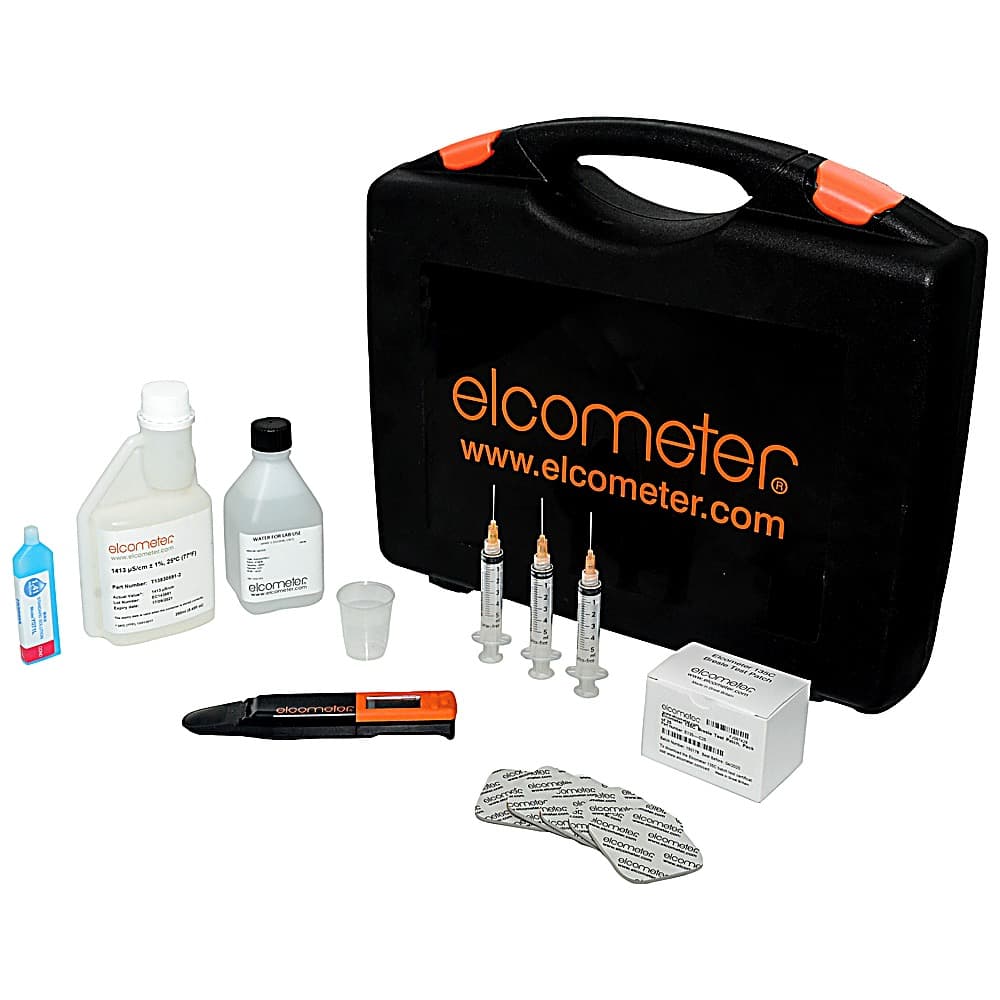
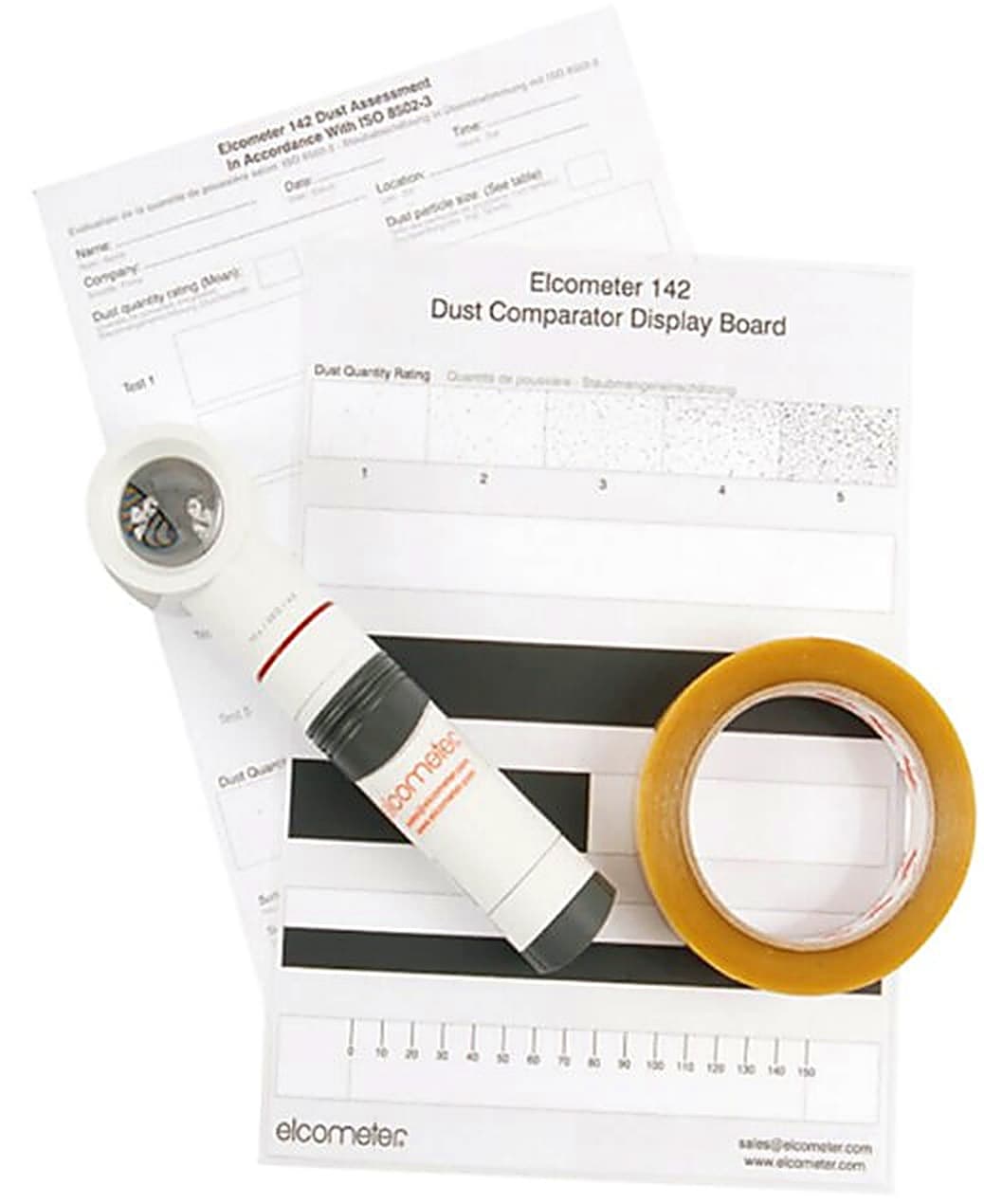
1. Surface profile: measure the anchor profile with a digital surface profile gauge such as the Elcometer 224, or with Testex replica tape, and check it against the coating specification. 2. Visual cleanliness: compare the steel to the ISO 8501-1 reference photographs, such as the Elcometer 128 Pictorial Surface Standards, to confirm the grade required. 3. Soluble salts: salts invisible to the eye cause blistering under the coating. A Bresle test measures them. 4. Dust: a dust tape test (ISO 8502-3) shows whether the surface needs more cleaning before coating.
BAMR stocks the full range of surface preparation inspection instruments, so you can prove the job was done right.
Not sure which method fits your job?
BAMR supplies MontiPower Bristle Blasters and abrasive blasting equipment across Southern Africa, along with the inspection instruments to check the result. Tell us about your project and we'll help you choose.
Call +27 21 683 2100 or email sales@bamr.co.za.
Sources
- MontiPower: Bristle Blaster
- Farwest Corrosion: MontiPower Bristle Blaster
Got a question about this, or need help picking the right instrument for your job? , our product assistant.
Instruments referenced above.
Technical specialist at BAMR. Has spent years advising coating inspectors at industrial sites across southern Africa on instrument selection and compliance requirements.
More articles →
Not sure which method fits your job?
Tell us about your project and we'll help you choose. Call +27 21 683 2100 or email sales@bamr.co.za.
In a hurry? , our product assistant.