
 Shop online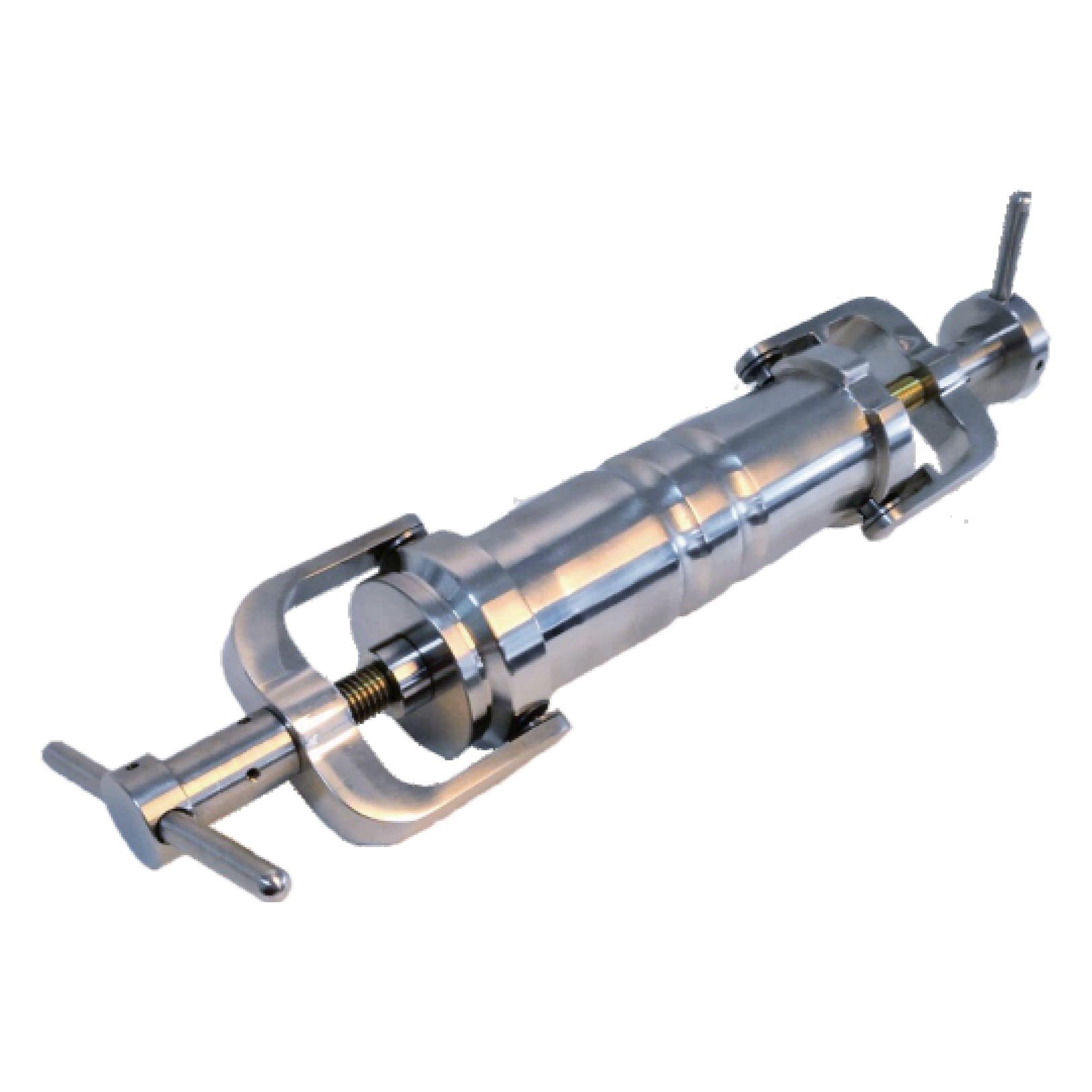
The BEVS 2103 Pressure Density Cup is used to calculate the specific gravity of paints and similar material. The BEVS 2103 Pressure Density Cup is of higher precision than a normal density cup, because the test sample is compressed in a stainless steel cylinder to 10 bar, which eliminates the bubbles inside the liquid. Density is calculated from the mass of liquid and the cylinder volume.
BEVS 2103 Pressure Density Cup
A stainless steel density cup used to calculate the specific gravity of paints and similar materials. The test sample is compressed in the cylinder to 10 bar, which eliminates bubbles inside the liquid for a more precise reading than a standard density cup.
- Higher precision. Higher precision than a conventional density cup.
- Bubble elimination. The sample is compressed to 10 bar, which eliminates bubbles inside the liquid.
- Stainless steel construction. Long-lasting performance.
When to choose the BEVS 2103 Pressure Density Cup
The BEVS 2103 pressurises the sample to remove bubbles before weighing, so it suits work where a standard density cup is not precise enough or does not meet a named standard.
- 1A more precise reading than a standard density cupThe sample is compressed to 10 bar inside a stainless steel cylinder, which eliminates bubbles trapped in the liquid before the density is calculated. A standard density cup has no way to remove those bubbles, so its reading can be thrown off by them.
- 2Testing to a named standardThe BEVS 2103 is built to ISO 2811-4 and BS 3900 A22, both pressure cup methods for determining density. Where a customer's specification calls for a result to one of those standards, a standard density cup does not meet it.
- 3Durability for repeated daily useThe cup is made of stainless steel for long-lasting performance, which suits a QC lab running the same density check on every batch rather than an occasional check.
Lower-budget alternatives
Ten minutes on a call with one of our specialists usually saves you from buying the wrong instrument.
Book a 10-minute callOr , our product assistant, for an instant answer.
When to use this
When to choose the BEVS 2103 Pressure Density Cup
The BEVS 2103 pressurises the sample to remove bubbles before weighing, so it suits work where a standard density cup is not precise enough or does not meet a named standard.
- 1A more precise reading than a standard density cupThe sample is compressed to 10 bar inside a stainless steel cylinder, which eliminates bubbles trapped in the liquid before the density is calculated. A standard density cup has no way to remove those bubbles, so its reading can be thrown off by them.
- 2Testing to a named standardThe BEVS 2103 is built to ISO 2811-4 and BS 3900 A22, both pressure cup methods for determining density. Where a customer's specification calls for a result to one of those standards, a standard density cup does not meet it.
- 3Durability for repeated daily useThe cup is made of stainless steel for long-lasting performance, which suits a QC lab running the same density check on every batch rather than an occasional check.
Lower-budget alternatives
Ten minutes on a call with one of our specialists usually saves you from buying the wrong instrument.
Book a 10-minute callOr , our product assistant, for an instant answer.
Specifications
Specifications
- Material
- Stainless steel
- Capacity
- 100 ml (accuracy +/- 1 ml)
- Testing pressure
- 10 bar (accuracy +/- 1 bar)
- Maximum pressure
- 31 bar (450 psi)
Conforms to
Conforms to
Downloads
Frequently asked questions
What does the BEVS 2103 Pressure Density Cup do?
The BEVS 2103 Pressure Density Cup calculates the specific gravity of paints and similar materials. The sample is compressed to 10 bar in a stainless steel cylinder, which eliminates bubbles, and density is worked out from the mass of the liquid and the cylinder volume.
What is the capacity of the BEVS 2103 Pressure Density Cup?
The BEVS 2103 Pressure Density Cup has a capacity of 100 ml, accurate to +/- 1 ml.
What pressure does the BEVS 2103 Pressure Density Cup test at?
10 bar, accurate to +/- 1 bar. Its maximum rated pressure is 31 bar (450 psi).
What standards does the BEVS 2103 Pressure Density Cup meet?
ISO 2811-4 and BS 3900 A22, both pressure cup methods for determining density.
What is the BEVS 2103 Pressure Density Cup made of?
Stainless steel, for long-lasting performance.
Why pressurise the sample rather than use a standard density cup?
Pressurising the sample to 10 bar eliminates bubbles inside the liquid, giving the BEVS 2103 Pressure Density Cup a more precise reading than a standard, unpressurised density cup.

Quote on the BEVS 2103 Pressure Density Cup by close of business.
Tell us about your application and we will send a quote with lead time and accessories.
Not sure this is the right model for your job? for a quick recommendation.
Request a quote
Request a quote
Tell us about your application and we will send a quote with lead time and accessories.