
 Shop online
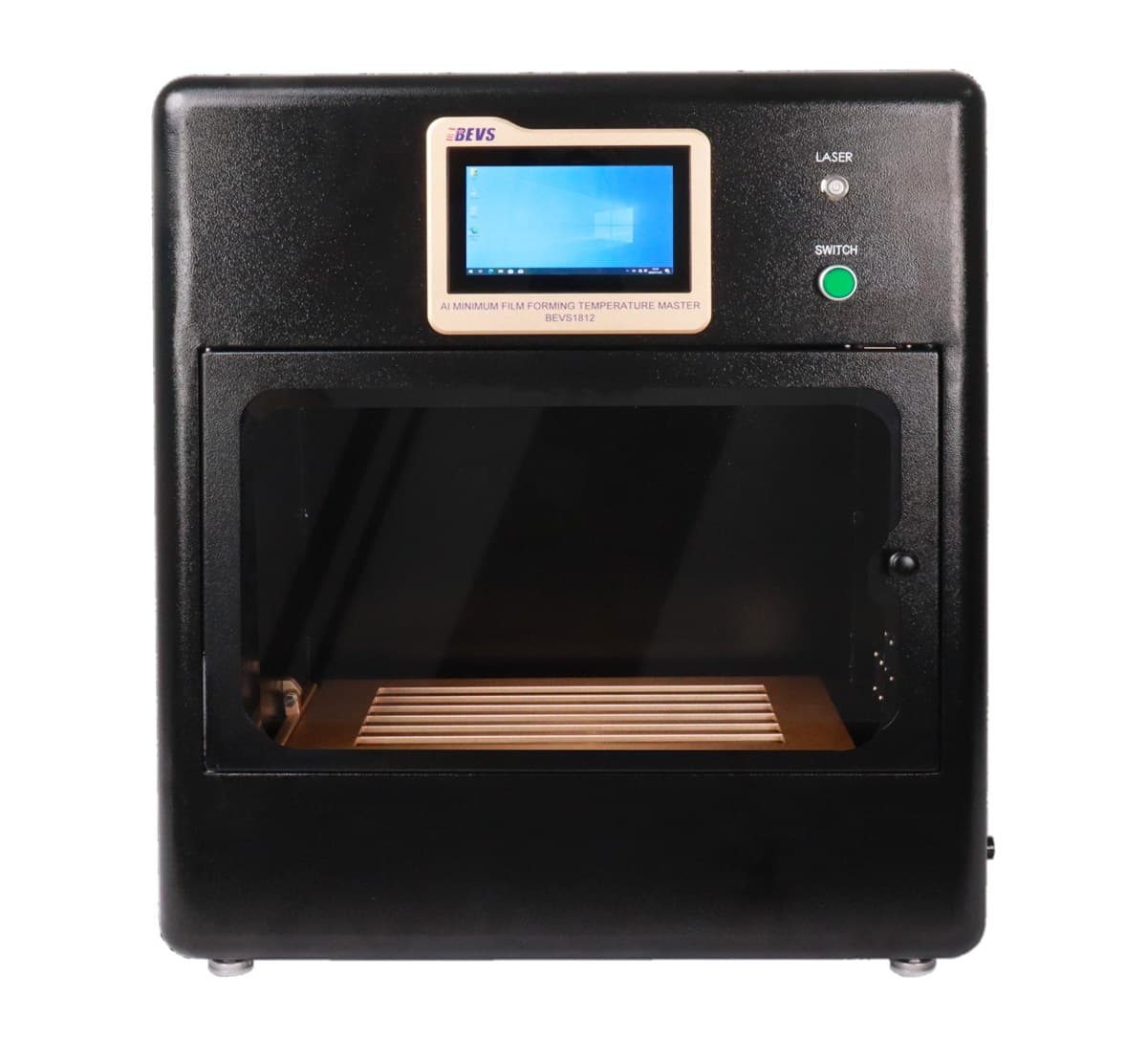
BEVS 1812 AI Minimum Film Formation Temperature (MFFT) Master is equipped with an intelligent temperature control system that automatically detects the minimum temperature at which the coating on the substrate forms a uniform transparent film. The BEVS 1812 displays the film formation temperature in real time. The BEVS 1812 AI Minimum Film Forming Temperature Master is mainly used to evaluate the film-forming performance of polymer emulsions and is widely applied in industries such as coatings, adhesives, synthetic fabrics, leather, and paper.
The working principle of the BEVS 1812 Minimum Film Formation Temperature (MFFT) Master is that there are a cooling source and a heating source on both sides of a metal plate. By adjusting the temperatures of the cooling and heating sources, a suitable temperature gradient is formed across the metal plate. The plate is equipped with 16 high-precision temperature sensors to measure the temperature gradient when the plate reaches thermal equilibrium. An emulsion or polymer dispersion is evenly coated on the metal plate to a specified thickness, and then the surface of the sample is blown with low-speed drying air. A high-definition camera captures the transition point where the emulsion or polymer dispersion changes from unpolymerized (white and opaque) to polymerized (continuous transparent film). The distance from this transition point to the nearest two temperature sensors is calculated, and the temperature at the transition point is determined, which represents the minimum film formation temperature of the sample.
BEVS 1812 AI Minimum Film Forming Temperature Master
The BEVS 1812 AI Minimum Film Forming Temperature Master measures the minimum film forming temperature (MFFT) of polymer emulsions and dispersions on a temperature gradient plate from -10°C to 65°C. A built-in camera detects where the film turns from white to clear, and 16 sensors give the temperature at that point. Six samples run at once, to ASTM D2354, ISO 2115 and GB/T 9267.
- 7-inch touchscreen Ultra-large touchscreen for simple and easy operation
- Intelligent temperature regulation For precise adjustment of the gradient plate temperature
- 16 high-precision temperature sensors Built in to ensure accuracy in recorded data
- 6 samples at once Capable of simultaneously testing 6 sets of samples, improving testing efficiency
- Integrated high-definition camera For precise film formation location identification
- Mobile infrared laser locator Assists in reading the temperature at the minimum film formation temperature location
- Real-time display Of gradient plate temperature
- Rapid heating and cooling With stable temperature maintenance
- Automatic MFFT detection Automatic detection of film formation location and measurement of minimum film formation temperature
- Temperature at any point Automatic measurement of temperature at any location on the gradient plate
When to use the BEVS 1812 AI Minimum Film Forming Temperature Master
Choose the BEVS 1812 when you need the minimum film forming temperature of an emulsion or polymer dispersion, measured automatically and recorded.
- 1Measuring the MFFT of emulsions and polymer dispersionsThe BEVS 1812 finds the lowest temperature at which an emulsion forms a continuous clear film, which is the test ASTM D2354, ISO 2115 and GB/T 9267 describe. The built-in camera picks out the point where the film turns from white to clear, rather than an operator judging it by eye, and the temperature at that point comes from the 16 sensors in the plate.
- 2Comparing several samples side by sideThe BEVS 1812 tests 6 samples at once on the same gradient plate, so formulations or batches can be compared in a single run under the same conditions. Each result is saved automatically with its photo and data, and a test report can be produced, which gives a lab a record of every run.
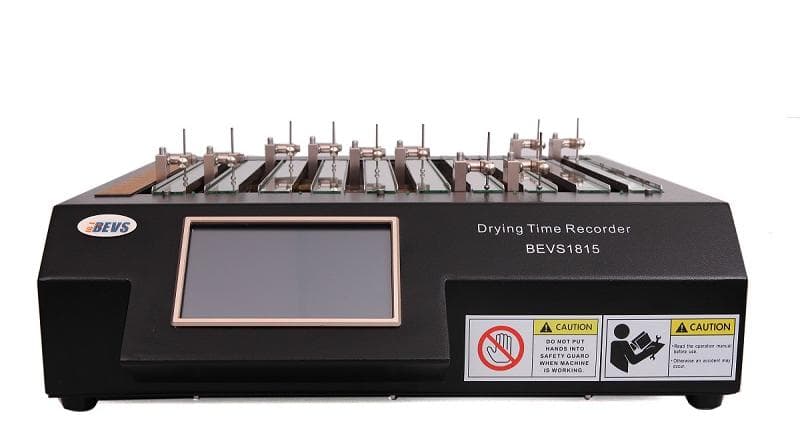
- 3A temperature, not a drying timeThe BEVS 1812 tells you the lowest temperature at which a film forms. It does not tell you how long a coating takes to dry. For drying time at a given condition, use the BEVS 1813 / 1815 Drying Time Recorder instead.
Lower-budget alternatives
Ten minutes on a call with one of our specialists usually saves you from buying the wrong instrument.
Book a 10-minute callOr , our product assistant, for an instant answer.
When to use this
When to use the BEVS 1812 AI Minimum Film Forming Temperature Master
Choose the BEVS 1812 when you need the minimum film forming temperature of an emulsion or polymer dispersion, measured automatically and recorded.
- 1Measuring the MFFT of emulsions and polymer dispersionsThe BEVS 1812 finds the lowest temperature at which an emulsion forms a continuous clear film, which is the test ASTM D2354, ISO 2115 and GB/T 9267 describe. The built-in camera picks out the point where the film turns from white to clear, rather than an operator judging it by eye, and the temperature at that point comes from the 16 sensors in the plate.
- 2Comparing several samples side by sideThe BEVS 1812 tests 6 samples at once on the same gradient plate, so formulations or batches can be compared in a single run under the same conditions. Each result is saved automatically with its photo and data, and a test report can be produced, which gives a lab a record of every run.
- 3A temperature, not a drying timeThe BEVS 1812 tells you the lowest temperature at which a film forms. It does not tell you how long a coating takes to dry. For drying time at a given condition, use the BEVS 1813 / 1815 Drying Time Recorder instead.
Lower-budget alternatives
Ten minutes on a call with one of our specialists usually saves you from buying the wrong instrument.
Book a 10-minute callOr , our product assistant, for an instant answer.
Specifications
Technical parameters
- Temperature range
- -10°C to 65°C, ±0.1°C
- Sample quantity
- 6 sets
- Film width
- 16 mm
- Laser line movement range
- 0-300 mm
- Precision
- Reproducibility ±2°C, Repeatability ±4°C
- Imaging system resolution
- 5472 x 3768 pixels
Instrument parameters
- Dimensions
- 640 x 420 x 750 mm (L x W x H)
- Power supply
- AC 110 V/220 V, 50/60 Hz
- Power
- 1500 W
- Total weight
- 60 kg
What's in the kit
What's in the kit
Conforms to
Conforms to
Accessories
Accessories
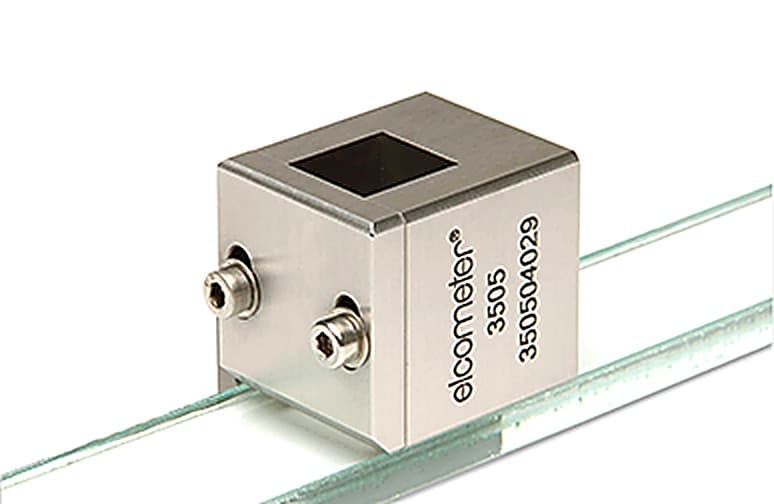
| BEVS 1805/1 | 25mm Cube Applicator, Film Width 16mm, Gaps 37/75µm |
| BEVS 1805/3 | 25mm Cube Applicator, Film Width 16mm, Gaps 50/100µm |
Downloads
Frequently asked questions
What does the BEVS 1812 AI Minimum Film Forming Temperature Master measure?
The BEVS 1812 measures the minimum film formation temperature (MFFT): the lowest temperature at which an emulsion or polymer dispersion on the substrate forms a uniform transparent film. It is mainly used to evaluate the film-forming performance of polymer emulsions in industries such as coatings, adhesives, synthetic fabrics, leather and paper.
How does the BEVS 1812 find the film formation point?
A cooling source and a heating source on either side of a metal plate set up a temperature gradient, measured by 16 high-precision sensors. The sample is coated on the plate and blown with low-speed drying air. A high-definition camera captures where it changes from white and opaque to a continuous transparent film, and the temperature at that point is calculated from the two nearest sensors.
Which standards does the BEVS 1812 work to?
The datasheet lists ASTM D2354 (emulsion vehicles), ISO 2115 (plastics) and GB/T 9267 (emulsions for coatings and polymer dispersions for coatings and plastics).
What temperature range and precision does the BEVS 1812 have?
The temperature range is -10°C to 65°C, ±0.1°C. Precision is given as reproducibility ±2°C and repeatability ±4°C.
How many samples can the BEVS 1812 test at once, and how are they applied?
Six sets of samples, each with a film width of 16 mm. The BEVS 1805/1 and BEVS 1805/3 25mm Cube Applicators (16mm film width, gaps 37/75 µm and 50/100 µm) are available to order for applying them.
What comes with the BEVS 1812, and what does it need?
The BEVS 1812 is supplied with an Auxiliary Coating Stand. It runs on AC 110 V/220 V, 50/60 Hz, draws 1500 W, measures 640 x 420 x 750 mm (L x W x H) and weighs 60 kg.
Related products

Quote on the BEVS 1812 AI Minimum Film Forming Temperature Master by close of business.
Tell us about your application and we will send a quote with lead time and accessories.
Not sure this is the right model for your job? for a quick recommendation.
Request a quote
Request a quote
Tell us about your application and we will send a quote with lead time and accessories.