
 Shop online
Infrared Thermometers
Infrared Thermometers are used to measure the temperatures of humans without any contact. Measuring a person's temperature can be done in several ways, using Infrared Thermometers is a quick and easy way to measure body temperature, compared with other traditional methods of taking human temperature. Infrared Thermometers may be used to reduce cross-contamination risk and minimise the risk of spreading diseases like Covid-19.
In this article
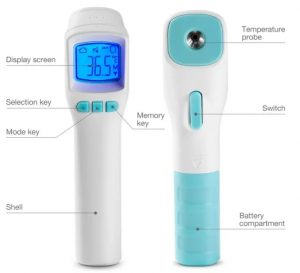
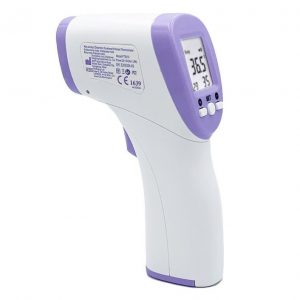
These thermometers are available to buy online at GaugeIt, BAMR's online shop, including the BTG002 Infrared Body Temperature Gun.
Infrared Thermometers
Infrared Thermometers are used to measure the temperatures of humans without any contact. Measuring a person's temperature can be done in several ways, using Infrared Thermometers is a quick and easy way to measure body temperature, compared with other traditional methods of taking human temperature. Infrared Thermometers may be used to reduce cross-contamination risk and minimise the risk of spreading diseases like Covid-19.
Before Infrared Thermometers are used, it is important to understand the benefits, limitations, and proper use of these thermometers. Improper use of Infrared Thermometers may lead to inaccurate measurements of temperature.
When a person contracts a virus such as the Covid-19 coronavirus and they are symptomatic, they will have symptoms resembling a fever. In this scenario the person's temperature will increase and be higher than the generally accepted 37°C. While typically 37.0°C is considered a "normal" temperature, some studies have shown that "normal" body temperature can be within a wide range, from 36.1°C to 37.2°C.
The quickest and easiest way to identify a high temperature is by using a Infrared Thermometer.
Advantages and limitations
Advantages of Infrared Thermometers:
- Quick and easy to use
- Non-contact approach - may reduce the risk of spreading disease between people being evaluated
- Measures temperature and displays a reading rapidly
- Easy to clean and disinfect
- Accurate
- Provides ability to retake a temperature quickly
Limitations of Infrared Thermometers:
- How and where the Infrared Thermometer is used may affect the measurement (for example; head covers, environment, positioning on forehead, perspiration).
Recommendations for proper use
The person using the device should strictly follow the manufacturer's guidelines and instructions for use for the specific Infrared Thermometer being used. The manufacturer's instructions should include the following information and recommendations for proper use:
- Use in a draft-free space and out of direct sun or near radiant heat sources.
- Typically, the environmental temperature should be between (16-40 ºC) and relative humidity below 85 percent. Note that each model has different parameters. Consult the manufacturer's instructions for Technical Specifications.
- Place the Infrared Thermometer in the testing environment or room for 10-30 minutes prior to use to allow the Infrared Thermometer to adjust to the environment.
- Ensure that the test area of the forehead is clean, dry and not blocked during measurement.
- The person's body temperature or temperature at the forehead test area has not been increased or decreased by wearing excessive clothing or head covers (for example headbands, bandannas), or by using facial cleansing products (for example cosmetic wipes).
- Hold the Infrared Thermometer sensing area perpendicular to the forehead and instruct the person to remain still during measurement(s).
- The distance between the Infrared Thermometer and forehead is specific to each Infrared Thermometer. Consult the manufacturer's instructions for correct measurement distances.
- Do not touch the sensing area of the Infrared Thermometer and keep the sensor clean and dry.
Core vs surface temperature
There are two ways to measure body temperature, by measuring core temperature and surface temperature.
- Core temperature: temperature of deep tissues, measured through the oral cavity, ear canal or rectum.
- Surface temperature: temperature of surface skin tissues, measured at the forehead or armpit.
Since surface temperature is more susceptible to changes in the surroundings, it is considered less accurate and is recommended for use only when there is difficulty in measuring the core temperature.
Comparison among different measurement methods
Methods compared: Oral, Ear, Rectal, Forehead and Armpit.
Suitability
- Infants and children below 6: Ear, Rectal, Forehead, Armpit
- Adults and children above 6, Cooperative: Oral, Ear, Rectal, Forehead, Armpit
- Adults and children above 6, Uncooperative: Ear
- Adults and children above 6, Unconscious: Ear, Rectal, Forehead, Armpit
Accuracy
- Oral: ☺☺☺
- Ear: ☺☺☺
- Rectal: ☺☺☺
- Forehead: ☺
- Armpit: ☺☺
Convenience and speed
- Oral: ☺☺☺
- Ear: ☺☺☺
- Rectal: ☺
- Forehead: ☺☺☺☺
- Armpit: ☺☺
Reference level for fever
- Oral: >37.5°C
- Ear: >38°C
- Rectal: >38°C
- Forehead: >36°C
- Armpit: >37.3°C
Where to buy
Link to the Infrared Thermometers:
BTG-3010 Infrared Temperature Thermometer
Buy Online at GaugeIT - coming soon!
Got a question about this, or need help picking the right instrument for your job? , our product assistant.
Technical specialist at BAMR. Has spent years advising coating inspectors at industrial sites across southern Africa on instrument selection and compliance requirements.
More articles →
Need help choosing the right instrument?
Talk to a BAMR specialist about your application.
In a hurry? , our product assistant.